IIJA Authorization Expires September 30, 2026. Only 18% of allocated funds have reached actual projects. The window to access $19B in program-specific federal water funding is closing now.
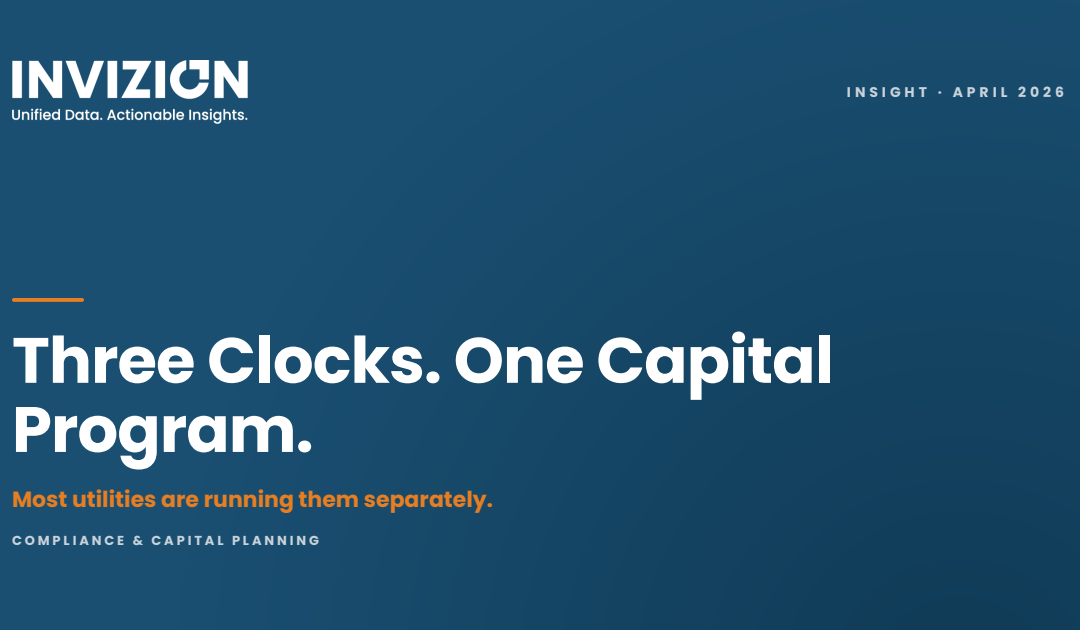
Three Clocks. One Capital Program.
Most utilities are running them separately.
PFAS compliance. Lead service line replacement. A closing federal funding window. Three programs with different deadlines, shared contractor pools, and one budget. Here is what siloed planning costs — and what integration prevents.

Section 1 of 3
Three Deadlines. One Budget.
The water sector is managing three of the largest compliance and infrastructure programs in its history — simultaneously. Each carries a different regulatory mandate, a different funding source, and a different compliance timeline. Together, they share something critical: the same capital budget, the same contractor market, and the same rate base.
$37–48B
EPA finalized its National Primary Drinking Water Regulation in April 2024. Sector-wide capital for treatment installation. Annualized O&M adds $2.7–3.5B/yr — roughly double EPA’s original projection.
$45–100B+
EPA Lead and Copper Rule Improvements finalized October 2024. 100% replacement by November 1, 2037. Federal cost estimate: $4,700–$6,900/line. AWWA analysis: $8,200–$12,000+. Up to ten million lines nationally.
$55B total
$4B for PFAS, $15B for lead service lines, balance for general infrastructure. Authorization expires September 30, 2026. Only 18% of allocated funds have reached actual projects. This deadline is not in the future.
The IIJA window is the one most utilities are not watching closely enough. The $55 billion in federal water infrastructure funding was appropriated in 2021 with the explicit intent to accelerate PFAS compliance and lead line replacement. Utilities that don’t have shovel-ready projects aligned to specific funding streams risk watching those funds lapse — and discovering that the largest federal water investment in history closed while their capital plan was still in annual review.
Section 2 of 3
The Hidden Cost of Three Separate Workstreams.
The natural organizational response to three simultaneous compliance mandates is to stand up three workstreams. A PFAS team. A lead line team. A capital planning team for everything else. It is understandable. It is also where many capital programs go sideways — not because the programs are managed badly, but because the conflicts between them are only visible from a unified view.
Contractor Capacity Conflicts
Approximately 90% of a capital project is sourced externally — contractors, suppliers, specialized labor. When PFAS treatment system installation and lead service line replacement programs mobilize simultaneously in the same geography, they compete for the same contractors, the same pipe crews, and the same equipment. A $20 million PFAS project scheduled for 2028 may be competing for mobilization with a lead line program at its own peak activity in the same year. Utilities managing these programs in silos often don’t discover the conflict until they’re two years into execution and facing cost escalation and delays.
Rate Impact Stacking
Each program carries its own rate case narrative. When PFAS compliance is presented to a rate-setting body separately from lead line replacement costs, the cumulative affordability impact is often underestimated until the combined effect lands on ratepayers at once. AWWA’s Beyond the Replacement Era projects that the average water bill may need to rise 126% by 2050 just to close the sector-wide funding gap — before these three programs are fully accounted for. Utilities that model cumulative rate impact across all three programs can sequence investments to manage annual bill impacts. Those that don’t discover the problem after rates are already set.
Funding Source Misalignment
The IIJA structured its water funding with program-specific allocations: $4 billion for PFAS through the DWSRF emerging contaminants fund, $15 billion for lead service lines through a dedicated replacement fund, and additional base DWSRF for general infrastructure. When these aren’t integrated into a single capital view, utilities sometimes leave one funding stream underutilized while oversubscribing another — or fail to have projects shovel-ready when a funding window closes. Only 18% of IIJA water funds have reached actual projects. The authorization expires September 30, 2026.
Section 3 of 3
What Integrated Capital Planning Looks Like.
Utilities that are successfully navigating all three programs simultaneously share a common approach: they model them together, not separately. This is not primarily a technology distinction — it is an organizational one. The decision to manage three compliance programs within a single capital planning view, rather than as parallel tracks with separate teams, is what changes the outcome.
What this looks like in practice: PFAS treatment projects, lead line replacement segments, and general asset renewal work are sequenced together in a single project view, not in three separate spreadsheets. When a PFAS project shifts from Year 3 to Year 4, the capital planning team can immediately see the cascade effect on lead line replacement projects competing for the same contractor, on the associated funding stream utilization, and on the rate schedule that was built around that original timeline. The adjustment is made before commitments are final, not after.
The AWWA data documents the gap: 79.7% of utilities have a Capital Improvement Plan in place. Only 40.9% have a digital transformation strategy. The gap between having a plan and having the tools to run three simultaneous multi-decade compliance programs within that plan — that is where utilities that are ahead of this challenge diverge from those managing by reactive triage.
The IIJA Window Is Not Coming Back
The September 2026 deadline deserves specific attention because it is the most immediately actionable. Utilities that don’t have projects aligned to specific IIJA funding streams — shovel-ready, with documentation complete — risk watching those funds lapse. The $4 billion for PFAS treatment and the $15 billion for lead lines were appropriated in 2021 with the explicit intent that they would accelerate these programs. Only 18% has reached actual projects. The gap between appropriation and execution reflects precisely the capital planning capacity problem described here.
The IIJA window closes September 30, 2026. PFAS compliance runs through 2029. Lead service line replacement extends to 2037. These programs will run concurrently for the next decade. The only question is whether they are planned together — or managed as three separate crises.
Sources: EPA PFAS National Primary Drinking Water Rule (April 2024) · EPA Lead and Copper Rule Improvements (October 2024) · Infrastructure Investment and Jobs Act (2021) · AWWA/Black & Veatch PFAS Cost Analysis · AWWA 2025 State of the Water Industry Report (3,575 respondents) · Beyond the Replacement Era (AWWA/Raftelis/One Water Econ, March 2026) · AWWA does not sponsor, endorse, or affiliate with third-party companies, products, or services.